Helm.ai reaches $70M in signed commercial contracts for its foundation models
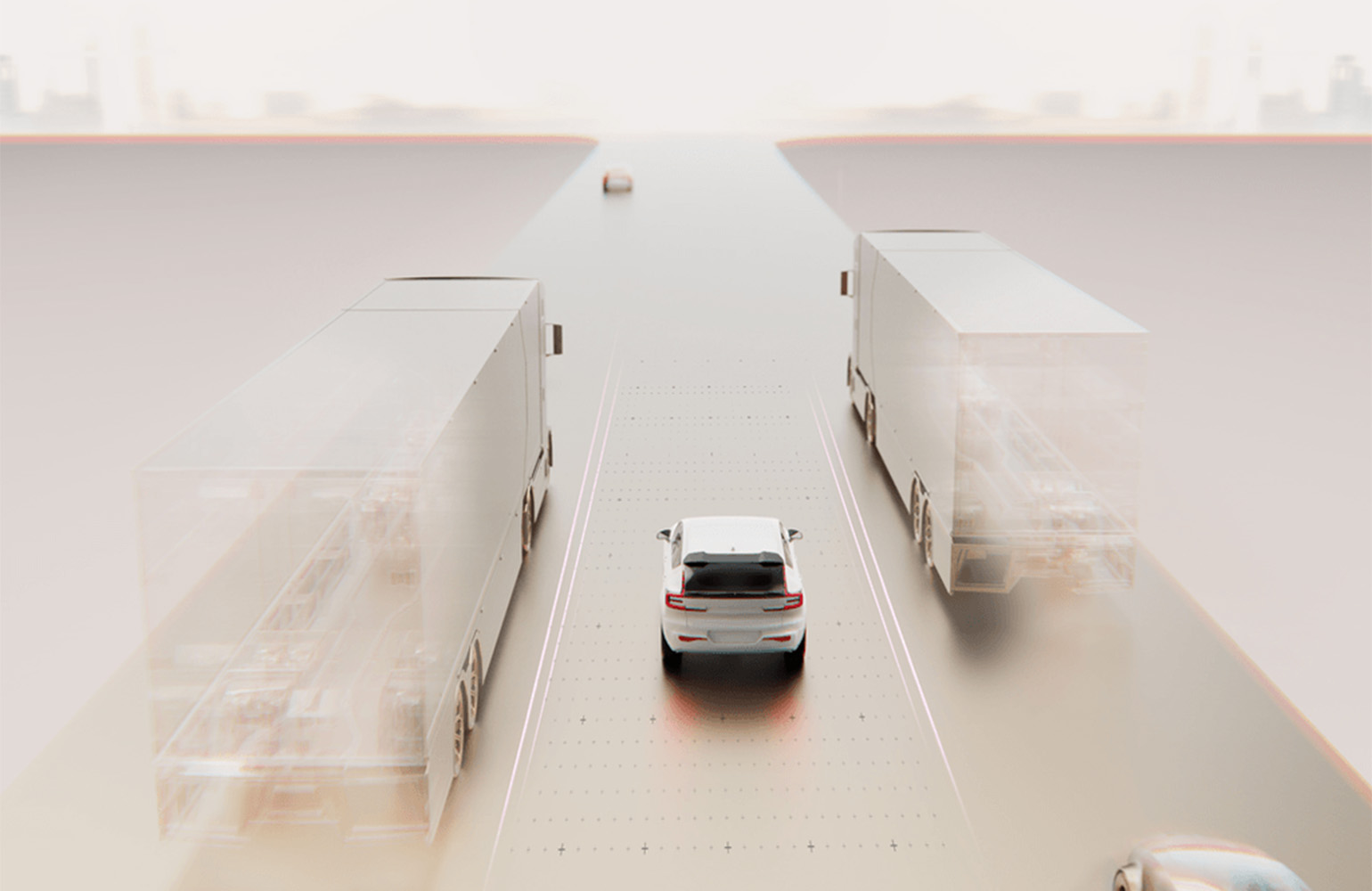
Foto: The Robot Report, tlačové materiály.
Zdroj: The Robot Report - Brianna Wessling | 8. 10. 2026
Helm.ai trained its foundation models using its unsupervised 'deep teaching' methodology to master the structure of the physical world itself. The post Helm.ai reaches $70M in signed commercial contracts for its foundation models appeared first on The Robot Report.
Helm.ai today said it has signed $70 million in commercial contracts for its foundation models for physical AI over a 12-month period. These contracts spanned global automotive OEMs, Tier 1 suppliers, and industrial automation companies.
The Redwood City, Calif.-based company considers the automotive industry as its flagship deployments, which involve deep partnerships. But, it also has partnerships with customers in mining and construction.
“Those kinds of projects coming to that level of maturity are super exciting for us, because it demonstrates that there’s a real demand for the technology that we’ve built,” Vladislav Voroninski, founder and CEO of Helm.ai, told The Robot Report. “It’s clearly crossing that threshold into actually being deployed in the real world,”
“Also, as a company, we’re now on a path to break even, which is rare in this space, and it’s a testament to the capital efficiency of our approach,” he said.
Founded in 2016, Helm.ai’s software already spans SAE Level 2 through 4 autonomous vehicle (AV) programs, production-track perception in heavy industry, and expanding robotics development.
Inside Helm.ai’s ‘deep teaching’ methodology
Helm.ai trained its foundation models using its unsupervised “deep teaching” methodology to master the structure of the physical world itself. This separates the problem of understanding an environment from the problem of acting in it.
“The way we attack the problem is different from thinking about it as there’s some sensor data in, and a decision comes out,” Voroninski said. “We actually have structure throughout the stack, so each part of the stick is still learned end to end using DNNs [deep neural networks]. The way we think about solving the problem is, first, learn how to perceive the world, and then we actually act on that perception. So, it’s similar to how humans learn.”
Voroninski compared this to a teenager learning to drive. That teenager doesn’t have to drive for millions of hours to experience every single possible scenario they could encounter on the road.
“They can already perceive everything perfectly and make predictions about what the other vehicles or people might do, without actually relying on driving data,” said Voroninski. “That’s a pretty critical thing, and that gives us data efficiency, which is really important in the autonomous driving space, but it’s actually even more important in robotics. I would say it’s essential in robotics.”
An automaker simply has to figure out how they will ramp up collecting data. “For robotics applications, nobody has a large fleet of robots yet. There not really any data available to even train that way,” Voroninski said. “So, data efficiency becomes very, very important.”
“We factor our stack into perception, and then everything downstream from perception,” he continued. “That plays an important role in data efficiency as well as safety certification.”
The result is a system that learns from a fraction of the data, general
 The Robot ReportUSA
The Robot Report je americký online spravodajský portál zameraný na robotiku, automatizáciu a umelú inteligenciu. Prináša novinky o najnovších trendoch v technologickom priemysle.
Inzercia
Zdroj: The Robot Report - Brianna Wessling | Spracovanie: Martin Kováč, inteligencia24
O autorovi

Martin Kováč
Martin je technologický novinár so zameraním na umelú inteligenciu, umelú inteligenciu a automatizáciu. Po štúdiu informatiky na STU v Bratislave pracoval v niekoľkých technologických firmách, odkiaľ prináša praktický pohľad na najnovšie inovácie. Pre umelá inteligencia24 pokrýva témy od priemyselných AI systémov až po spotrebiteľskú elektroniku a autonómne vozidlá.